When your baby starts weaning, one thing becomes clear very quickly: mealtimes are messy. Choosing the right bib can make a big difference to how easy (or stressful) those meals feel.
Two of the most common options are silicone bibs and fabric bibs. Both have benefits, but they work quite differently during the weaning stage.
Silicone Bibs
Silicone bibs have been a very popular choice in the past as they’re waterproof and easy to clean. Many feature a deep pocket designed to catch food that falls from your baby’s mouth or hands.
Pros
- Waterproof and stain-resistant
- Easy to wipe clean or rinse after meals
- Built-in pocket catches some dropped food
- Durable and long-lasting
Silicone bibs are convenient, especially when you want something quick to rinse and reuse.
Cons
- Only cover the chest area
- Arms and sleeves remain exposed
- Food can still fall into your baby’s lap or onto the floor
For babies who enjoy squishing and throwing food (which is common during baby-led weaning), silicone bibs often don’t provide enough coverage.
Fabric Bibs
Fabric or dribble bibs are the traditional choice and are usually the first thing you think of when you hear the word ‘bib’.
Pros
- Soft and comfortable for babies
- Lightweight and flexible
- Easy to machine wash
However, standard fabric bibs also have some drawbacks during weaning.
Cons
- They absorb liquids and stains
- Often need washing after every meal
- Usually only protect the chest
Because fabric absorbs food and liquid, they can quickly become soaked during messy meals.
Coverall Weaning Bibs
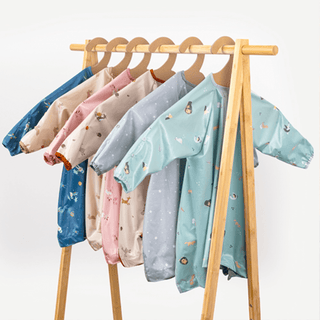
Coverall weaning bibs offer a more complete solution for the realities of baby-led weaning. Designed with full waterproof arm coverage and a larger protective front panel, they help shield not just the chest, but also sleeves, lap, and clothing underneath. The Bibado Coverall also attaches to the highchair, helping to catch dropped food in a handy ‘well’ before it reaches the floor.
Pros
- Full coverage of arms, torso, and lap
- Allows full freedom of messy food exploration
- Supports more relaxed, independent self-feeding
- Reduces the need for full outfit changes after meals
Cons
- Can take slightly longer to put on than a standard bib
- May feel bulkier for some babies at first
- Needs wiping after use
Coverall bibs are especially useful during this stage of rapid development, when babies are using food as a tool for learning—exploring textures through squishing and smearing, building coordination through grasping and self-feeding, and developing early cognitive skills through experimentation (including throwing). By supporting this hands-on exploration, they help protect clothing while allowing babies the freedom to fully engage in the sensory and motor experiences that drive development.
Which Bib Works Best for Weaning?
Both silicone and fabric bibs can help reduce mess, but neither offers full protection during baby-led weaning. Babies often get food on their sleeves, in their lap, and down the gap between themselves and the highchair, causing discomfort for you and them both.
That’s why many parents choose a full-coverage weaning bib, like the Bibado Coverall Weaning Bib. The Bibado Coverall bib is unique in that it protects arms, torso and lap, and attaches to the highchair to catch dropped food before it reaches clothes or the floor.
The Bottom Line
Silicone bibs are easy to clean, and fabric bibs are soft and simple, but both have limitations when it comes to messy weaning.
For many families, the best solution is a bib that offers more coverage and better mess protection, allowing babies to explore food freely while keeping clean-up manageable. This supports the key benefits of self-feeding—like building coordination, independence, confidence and boosting their general cognitive development—without making mealtimes overwhelming for parents. It helps bring the developmental benefits of self-feeding into everyday life without adding extra stress at the table. That's why 1 in 5 UK households prefer the Bibado Coverall Weaning Bib for their weaning journey!
 Shop Now


%20those%20meals%20feel.%0ATwo%20o...)