Mealtime adventures are better with Bibado! Let our award-winning products make a difference to your weaning journey.
 Shop Now

CART
Your cart is empty
Mealtime adventures are better with Bibado! Let our award-winning products make a difference to your weaning journey.
Shop Now
Baby-led weaning (BLW) is a great way for babies to start eating solid foods and kickstarting their sensory development, but it’s also surrounded by a number of myths and misconceptions. Separating fact from fiction can help you feel confident and relaxed at mealtimes.
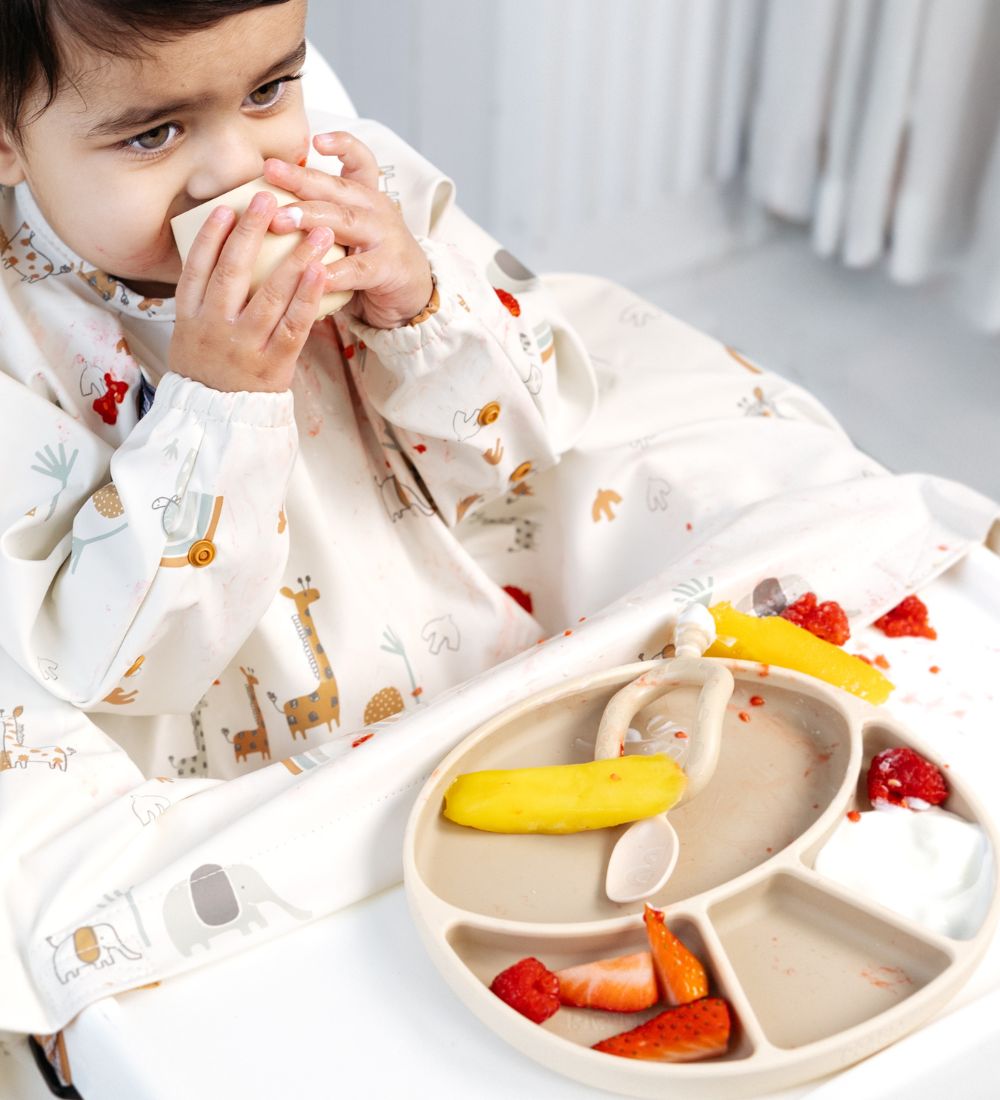
Baby-led weaning (BLW) is a great way for babies to start eating solid foods and kickstarting their sensory development, but it’s also surrounded by a number of myths and misconceptions. Separating fact from fiction can help you feel confident and relaxed at mealtimes.
It’s true that BLW can be messy, but that doesn’t mean it’s chaotic. Mess is actually a key part of the learning process. Babies explore textures, flavours, and self-feeding skills through touch and experimentation, firing essential growth hormones to strengthen their brain connections. For more detail, check out our ‘Mess is Best’ blog.
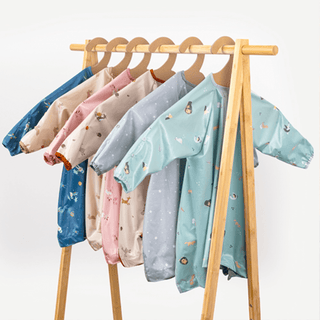
Tools like full-coverage weaning bibs, such as the Bibado Coverall Bib, help to make post-meal clean-up manageable while letting babies explore freely.
Some parents worry that BLW won’t provide enough nutrition, especially iron and protein. In reality, babies can get adequate nutrition if they are offered a variety of healthy, iron-rich and protein-packed foods alongside breast milk or formula. Breast milk or formula remains the primary source of nutrition until around 12 months, with solids introduced gradually to complement - not replace - it during this transition.
The purpose of weaning before this stage is to gently introduce tastes, textures, and self-feeding skills while supporting developmental readiness, rather than to meet full nutritional needs straight away. Patience is key — babies gradually eat more as they develop coordination and confidence. The role of weaning at this stage is in ensuring that when milk feeds do start to reduce (around 10-12 months), they’re both mentally and physically prepared for solids to take over the nutritional heavy-lifting.
Choking is a common concern, but research shows that with supervision and safe food preparation, BLW is no more dangerous than traditional spoon-feeding. In-fact, baby-led weaning can actually reduce their risk of choking as children become better able to handle firmer textures of foods, developing their mouth muscles and coordination.
Always offer age-appropriate foods, cut items into manageable shapes, and never leave your baby unattended while eating. For more guidance, see our guide to avoiding choking whilst self-feeding.
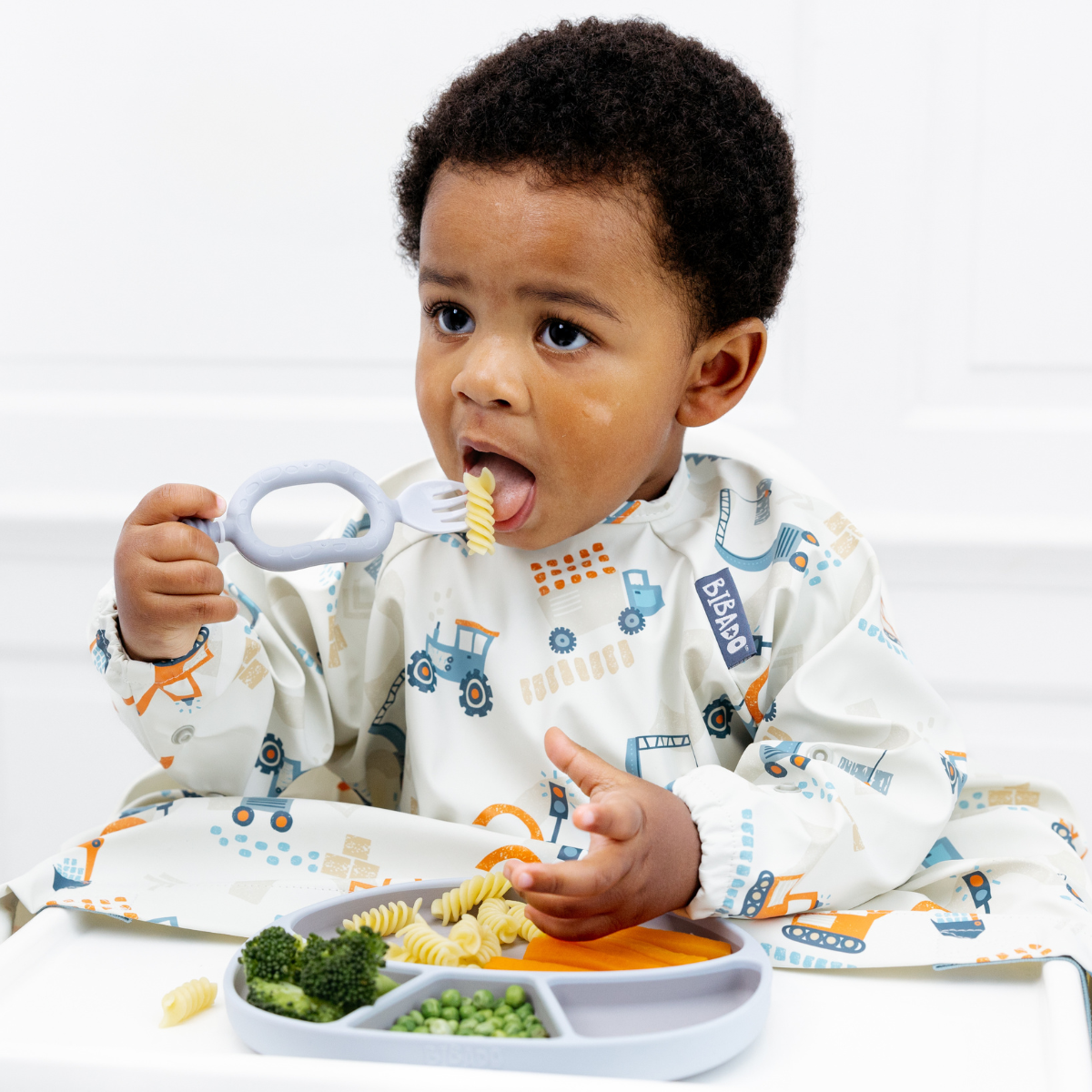
Some believe BLW delays spoon skills. In reality, BLW encourages independent feeding skills, and eating with their hands is only one part of BLW - pre-loaded spoons, dippers and sporks can be introduced from the very beginning at 6 months, making it easier for baby to self-feed while also advancing their dexterity and utensil control.
Bibado's 2-in-1 Dippit Weaning Spoon allows parents to preload the spoon and offer it to their child, who instinctively reaches for it with both hands to bring it into their midline and up to their mouth. This naturally helps to develop a range of motor control skills, including grasping, gripping, hand-eye coordination, wrist control and elbow flexion.
Our newest Sporkit shares a lot of similarity to the Dippit, but the Sporkit’s prongs allow them to move on to gripping foods like mango, avocado, green beans, etc - all of which babies can find challenging to handle themselves at a young age, allowing them to explore a wider range of foods from day one.
BLW is about allowing babies to explore and learn at their own pace, allowing your child to benefit from the wide-ranging physical and cognitive benefits that self feeding offers. While mess, slow progress, and experimentation are normal, these are all signs of healthy development. Using practical tools like Coverall bibs, Dippit and Sporkit makes mealtimes less stressful while supporting your baby’s learning and independence.
By understanding what really matters, you can approach baby-led weaning with confidence, knowing that your baby is learning, growing, and enjoying food with freedom. In doing so, you’re also laying the foundations for a positive, relaxed relationship with food, helping them build trust in their own hunger cues and enjoyment of eating that can last a lifetime - also giving them a developmental boost to give them the best possible start to life.
Why Does My Baby Throw Food on the Floor During Meals?
Food throwing can feel frustrating, especially when it happens again and again. But the good news is that it's extremely common during weaning. In fact, it’s often a normal, and even encouraged, pa...
Read more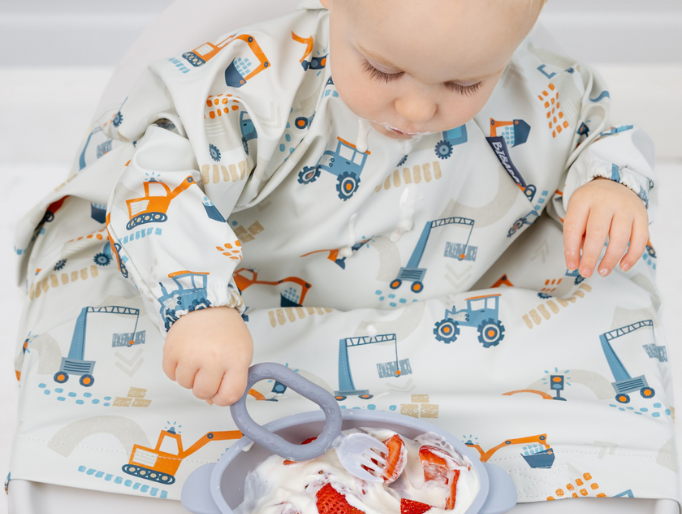
Silicone Bibs vs Fabric Bibs: Which Is Best for Weaning?
When your baby starts weaning, one thing becomes clear very quickly: mealtimes are messy. Choosing the right bib can make a big difference to how easy (or stressful) those meals feel. So which one ...
Read moreFollow us for more delicious, nutritious bite-size Bibado goodness
%20is%20a%20great%20way%20for%20babies%20to%20start%20eating%20solid%20foods%20and%20kickstarting%20their%20sensory%20development,%20but%20it%E2%80%99s%20also%20surrounded%20by%20a%20number%20of%20myths%20and%20misconceptions.%20Separating...)