Mealtime adventures are better with Bibado! Let our award-winning products make a difference to your weaning journey.
 Shop Now
CART
Your cart is empty
Mealtime adventures are better with Bibado! Let our award-winning products make a difference to your weaning journey.
Shop Now
At mealtimes, it’s natural to want to step in—but helping too quickly can take away valuable learning moments. This blog explores why letting your baby struggle (and get messy!) is key to building confidence, coordination, and a positive relationship with food—and how to support them without taking over.

There’s a moment every parent recognises. Your baby reaches for the spoon. The bowl tips slightly. Food is about to go everywhere... And your instinct kicks in:
Help them. Fix it. Speed things up.
Maybe you guide the spoon to their mouth. Maybe you take over completely—just to make sure they eat something. Or maybe you’re watching the clock, trying to get out the door on time.
It feels helpful, but sometimes, in stepping in too quickly… we take away something incredibly important: We steal the struggle.
It doesn’t mean leaving your baby to fend for themselves completely.It means recognising that the messy, slow, imperfect process is where the real learning happens.
For example, we’re talking about moments when your baby:
They’re not failing. They’re problem-solving, learning and building a bank of critical skills that feed into every milestone.
Self-feeding isn’t just about eating—it’s about development. In the early stages of feeding (up to 12 months), we’re actually more concerned with the experience and exposure to foods. Consumption is a bonus because milk feeds remain the primary source of nutrition and sustenance.
Every attempt builds:
That yoghurt-covered face?
That’s curiosity and exploration (and sensory exposure that in turn boosts cognitive development!)
That food on the floor?
That’s cause and effect in action.
That wobbly spoon attempt?
That’s your baby’s brain wiring new skills
When we allow our babies to try, we’re saying: “I trust you. You can do this.”
But when we step in too quickly, we might unintentionally send less empowering messages: “You need me to do this for you.” Over time, those small moments shape confidence.
This is one of the biggest worries parents have—and it’s completely understandable. But here’s the key shift:
👉 In the early stages of weaning (up to 12 months of age), it’s not about how much they eat.
👉 It’s about the skills they build and the experiences they have.
Yes, they might eat less at first. But what they gain is far more valuable:
Confidence
Coordination
Independence
A positive relationship with food
You don’t need to step back completely—you just need to step in differently.
Here are some practical ways to help without stealing the struggle:
Put food on the spoon or Dippit for them, then let them take control.
A glance toward you
A pause in trying
A little reach for help
Let them lead.
Show them how to do it—then give them space to try. You can repeat the process to reinforce it, but give them time to try in between your demonstrations.
If you feel the urge to jump in, take a breath.
Ask yourself: Do they actually need help right now?
Mess isn’t a problem—it’s part of the process.
Experts agree that getting messy helps your baby learn about food and eating. Eating is an incredibly sensory experience. Babies and young children innately learn about the world around them through their bodies and physical experiences. We call this sensorimotor learning.
When your baby eats, every sense is firing at once: they’re seeing colours, smelling aromas, feeling textures, hearing crunches, and tasting new flavours. This full-sensory experience lights up large areas of the brain simultaneously, releasing essential growth hormones that help build and strengthen neural connections.
In fact, mealtimes are the only times in a baby’s day when all these senses work together at once — making them a powerful, regular and reliable driver of overall brain growth and development.
Because babies spend so much time eating, in this super-rich sensory environment, weaning isn’t just about nutrition and consumption — it’s literally helping to wire their brains one meal at a time. So yes — the splatters, smears, and crumbs everywhere aren’t just part of learning to eat; they’re the most effective way your baby’s brain grows and thrives.
It might help to reframe your job - your role is not to make your baby eat. Your role is to:
Their role? To decide:
The next time you feel yourself about to step in… Pause. Watch them try, and remind yourself: “This is their struggle—and I won’t steal it.” Because the goal isn’t just a full tummy. It’s a child who:
Even if it starts with a spoon… and a whole lot of mess.

Assisted Feeding in Weaning: Why Modelling Eating Matters
More often than not, we worry about what or how much our baby is eating, but how often do the health professionals we meet in those early days tell us how important our role is in the process?
Read more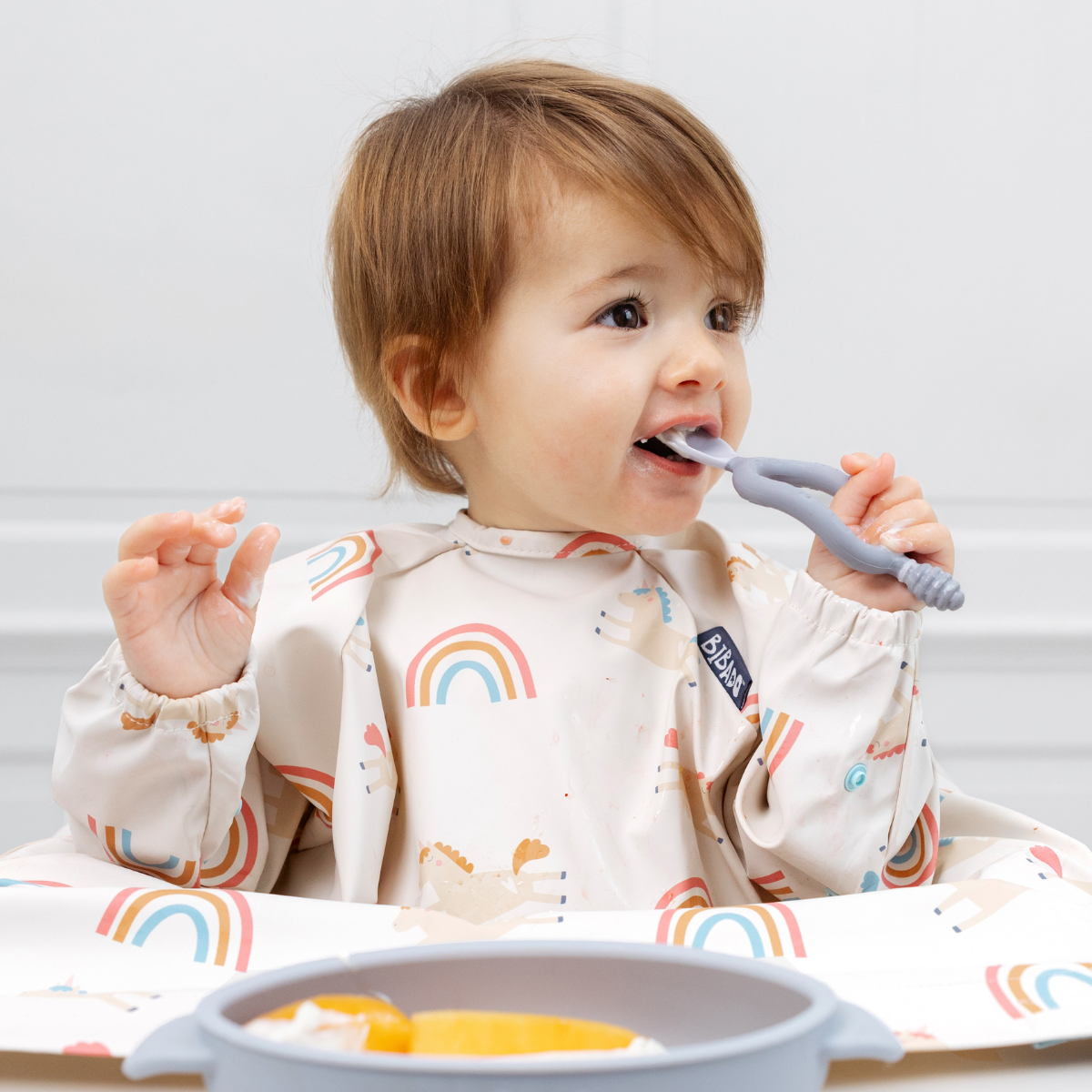
The Best Bibs for Baby-Led Weaning (Why Coveralls Are a Game-Changer)
From yoghurt-covered sleeves to spaghetti in their lap, babies love to explore food with their hands - which is exactly what baby-led weaning encourages. Choosing the right bib can make a huge diff...
Read moreFollow us for more delicious, nutritious bite-size Bibado goodness
