Mealtime adventures are better with Bibado! Let our award-winning products make a difference to your weaning journey.
 Shop Now
CART
Your cart is empty
Mealtime adventures are better with Bibado! Let our award-winning products make a difference to your weaning journey.
Shop Now
Some days you'll witness obvious breakthroughs. Other days, the learning will be happening quietly behind the scenes as your baby builds confidence, sensory awareness and lifelong eating skills.
Your job isn't to create perfect, tidy mealtimes. It's simply to create the opportunity. Here's how to know you're doing exactly that:
Let's be honest. Mess can feel like one of the biggest obstacles to enjoying weaning.
When food ends up everywhere except your baby's mouth, it's easy to wonder whether it's really worth it. Should they be eating more? Should they be making less mess? Should you be stepping in more often?
Then there's the inevitable comparison. Social media is full of babies who appear to eat everything they're offered, while other parents seem to have it all figured out. Before long, it's easy to find yourself questioning whether you're doing it "right."
The reality is very different.
The sooner you understand the extraordinary developmental value of messy mealtimes, the easier it becomes to see the mess for what it really is: a sign that your baby is exploring, experimenting and learning.
Some days you'll witness obvious breakthroughs. Other days, the learning will be happening quietly behind the scenes as your baby builds confidence, sensory awareness and lifelong eating skills.
Your job isn't to create perfect, tidy mealtimes. It's simply to create the opportunity. Here's how to know you're doing exactly that:
Before thinking about what your baby eats, think about how they're sitting.
A stable, well-supported position helps babies reach, grasp, chew and swallow more comfortably. Make sure they're sitting upright, their food is within easy reach, and the tray or table is at a comfortable height.
Then make the practical mess manageable for yourself.
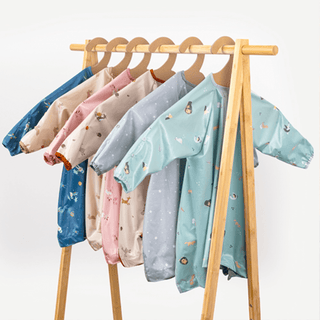
A Bibado Coverall protects clothing and keeps the clean-up easier, so you can relax and let your baby explore instead of worrying about every dropped mouthful.
Babies don't just eat food. They investigate it.
They pick it up, turn it over, squash it, drop it, retrieve it and sometimes finally bring it to their mouth. That isn't wasted time. That is the learning.
Try not to rush meals or step in too quickly. Give your baby a chance to solve little problems for themselves before offering help.
The more opportunities they have to practise, the more confident they become.
One of the biggest mindset shifts in weaning is remembering that swallowing isn't the only measure of success. There’s a roadmap that we use to make sure every exposure and interaction with food counts.
Looking
Touching
Smelling
Licking
Chewing
Even calmly tolerating a food on the tray is helping build familiarity.
The more relaxed these experiences feel, the more likely your baby is to develop confidence around different foods and textures over time.
Instead of asking: "How much did they eat?" Try rethinking it as: "What did they experience today?"
Very few babies love every new food the first time they see it. Or the second.
Or sometimes even the tenth. That doesn't mean they're fussy or they don’t like it. It means they're learning.
Every repeated exposure helps unfamiliar foods become more familiar and less intimidating. The same is true for skills like scooping, chewing, drinking from an open cup or using cutlery.
Progress isn't built in one meal. It's built over hundreds of little moments.
It's completely natural to want to help, but so much learning often happens during the struggle.
If your baby keeps turning their spoon upside down or can't quite grip a slippery piece of fruit, pause before stepping in.
A little challenge helps them develop coordination, confidence and problem-solving.
Support them where needed—perhaps by preloading a spoon or steadying a bowl—but let them complete as much of the task as they can themselves.
Mess is a HUGE part of sensory learning.
Constantly wiping hands and faces can interrupt your baby's concentration and remove the very textures they're trying to understand.
Unless they're becoming distressed or there's a safety concern, let them enjoy the experience and save the clean-up until there's a natural pause.
Some meals will last longer than others.
Some days your baby will be curious and engaged. Other days they'll quickly let you know they've had enough.
Rather than focusing on the clock - or trying to persuade them to have "one more bite" - watch your baby.
If they're still exploring, reaching, tasting and interacting, wonderful.
If they've turned away, become upset or clearly lost interest, it's okay to finish the meal.
Ending positively helps keep mealtimes enjoyable.
Babies learn by watching. Let them see you eating, enjoying different foods and using cutlery.
Talk naturally about what you're eating:
"This carrot is crunchy."
"This yoghurt feels cold."
Show curiosity rather than persuasion. Your role is to model, and your baby's role is to decide when they're ready.
Babies are human too. Some days they're hungry and super-engaged, and other days they will seem less interested. Teething and illness can cause setbacks, and yesterday’s favourite food can quickly appear to be the floor’s best friend.
One difficult meal doesn't undo weeks of progress. Try not to judge weaning meal by meal, but to instead look for progress across weeks and months.
Some of the biggest developmental gains are invisible.
One day your baby suddenly manages a spoon or confidently chews a new texture, but those breakthrough moments have usually been built on dozens of quieter attempts beforehand.
So celebrate more than what's been swallowed. Celebrate curiosity and confidence. Celebrate upside down spoons and wonky scooping. Celebrate trying again.
Put simply, celebrate every new experience.
Because those moments are building the skills your baby will use for years to come.
You're probably doing a brilliant job if...
□ Your baby is sitting comfortably and can easily reach their food
□ You've made the mess manageable enough that you don't feel the need to constantly intervene
□ You let them touch, squish, smell and explore
□ You give them time to work things out before helping
□ You model eating without pressure
□ You celebrate touching and tasting—not just swallowing
□ You know repetition is part of learning
□ You don't compare today's meal with yesterday's—or your baby with anyone else's.
□ You watch their engagement rather than chasing one more mouthful
□ You accept that some days will bring big breakthroughs, while others are quietly building skills behind the scenes
The best measure of a messy mealtime isn't an empty bowl or plate. It's a baby who was given the opportunity to explore, experiment, practise and enjoy food.
Some days they'll eat loads and others they'll barely swallow a mouthful. Both can be successful.
Because every bite, lick, chew, squish, scoop and sniff is another opportunity to learn.
Don't measure intake. Measure experience. That's what doing messy mealtimes brilliantly really looks like.
10 Ways To Support Messy Mealtimes
Supporting messy mealtimes does not mean encouraging chaos for the sake of it or engineering elaborate sensory activities. It means creating an environment in which they can be set free to explore ...
Read more
The Simple Iron Hack Every Parent Should Know
When your baby starts solids, there is a lot to think about. New flavours, new textures, allergens, portion sizes and the inevitable mess can make every mealtime feel like a learning curve. But the...
Read moreFollow us for more delicious, nutritious bite-size Bibado goodness
