Mealtime adventures are better with Bibado! Let our award-winning products make a difference to your weaning journey.
 Shop Now
CART
Your cart is empty
Mealtime adventures are better with Bibado! Let our award-winning products make a difference to your weaning journey.
Shop Now
Constipation is incredibly common in childhood. In fact, children’s bowel and bladder charity ERIC reports that it affects up to 1 in 3 children, and babies can be affected too.
The good news? For most babies, a few simple habits around food, fluids and movement can help keep things moving comfortably. And if constipation does crop up, spotting it early can make a big difference.
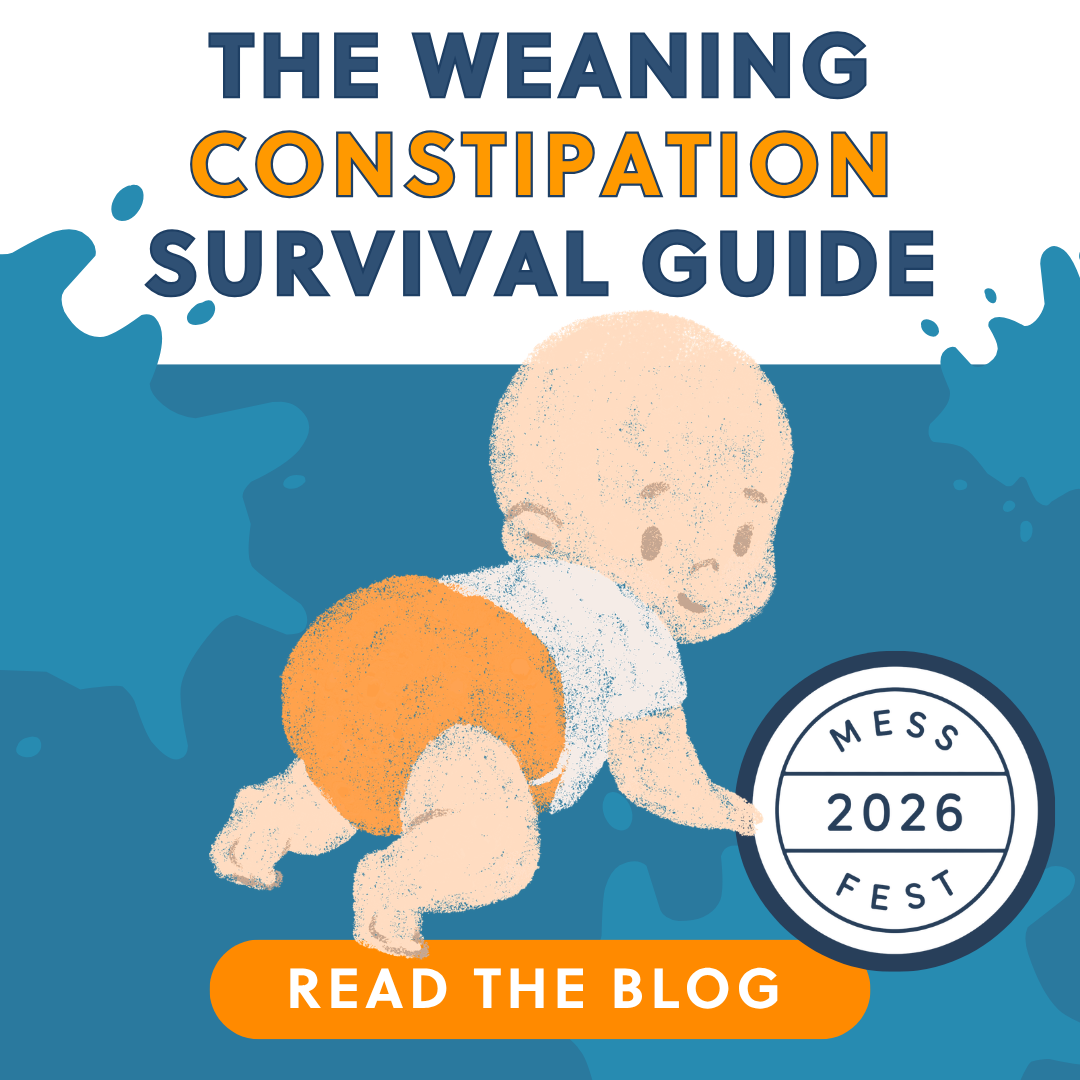
How to keep things moving – and what to do when they don’t.
Poo might not be the most glamorous part of weaning, but it’s one worth talking about.
Constipation is incredibly common in childhood. In fact, children’s bowel and bladder charity ERIC reports that it affects up to 1 in 3 children, and babies can be affected too.
The good news? For most babies, a few simple habits around food, fluids and movement can help keep things moving comfortably. And if constipation does crop up, spotting it early can make a big difference.
So, consider this your no-panic poo plan.
Once solids begin, poo changes. A lot.
It can become darker, smellier, thicker and much less predictable than the poo you became familiar with during milk feeding. That doesn’t necessarily mean your baby is constipated.
It’s how difficult the poo is to pass, rather than simply how often your baby goes, that matters.
According to the NHS, signs of constipation can include:
hard, dry or pellet-like poo
straining or appearing to be in pain when pooing
a firm tummy or tummy pain
a reduced appetite
passing fewer than three poos in a week
occasionally, a little bleeding after passing a particularly hard stool.
Starting solids is a huge adjustment for your baby’s digestive system.
Until now, their diet has predominantly been liquid. Suddenly they're being introduced to new foods, new textures and different amounts of fibre, while their fluid intake can change too.
That means a little digestive disruption during the transition isn't unusual.
But there are some easy ways to help.
Once your baby is eating solids, offer sips of water with meals alongside their usual breast or formula feeds.
Milk remains an important source of nutrition during the first year, so this isn't about replacing milk feeds with water – simply giving your baby regular opportunities to practise drinking and stay hydrated.
The NHS recommends making sure children have plenty to drink as part of both preventing and managing constipation.
Fruit, vegetables, pulses and whole-grains can all help provide fibre, which supports healthy bowel function.
Some easy weaning-friendly options include:
Pears, prunes, peaches, plums, peas, lentils, beans, oats, broccoli and sweet potato.
There’s no need to suddenly load every meal with fibre, though. Introducing a good variety of plant foods gradually – alongside adequate fluids – is a much gentler approach.
We hear a lot about probiotics and gut health – and weaning is a great opportunity to start introducing a varied diet that supports your baby’s developing gut microbiome.
Probiotics are live microorganisms, often referred to as “good” or “friendly” bacteria, that can help support the natural community of bacteria living in the gut.
Kefir and some natural yoghurts containing live cultures can be useful probiotic foods to include as part of a varied weaning diet.
For babies, choose pasteurised, full-fat and unsweetened varieties. Pasteurised full-fat yoghurt is suitable from around six months, and the NHS recommends full-fat dairy foods for young children because they provide valuable energy and nutrients for growth.
They’re also brilliantly easy to combine with some of our favourite constipation-friendly foods.
Try:
This gives you the benefit of dietary variety alongside fibre-rich foods and fermented dairy containing live cultures.
Current paediatric guidance doesn’t recommend probiotics alone as a treatment for functional constipation in children. Think of kefir and live natural yoghurt as useful additions to a varied, gut-friendly diet rather than a magic fix when your baby is already constipated.
Rolling, crawling, kicking, cruising and active floor play aren't just great for physical development – movement also helps support normal gut movement.
Even something as simple as bicycle-leg movements can feel soothing when a baby seems uncomfortable.
One hard poo doesn't automatically mean you have a constipation problem.
Look at the bigger picture. Is your baby consistently passing hard stools? Are they distressed when pooing? Has their appetite changed? Do they appear to be holding poo in?
Catching a pattern early is much more useful than obsessing over every nappy.
If things have started slowing down, focus on fluid + fibre + movement.
Keep offering water with meals, continue normal milk feeds and include foods such as pears, prunes, plums, peaches, peas and oats.
You can also give your baby plenty of opportunity for floor play and movement.
But don't let persistent constipation rumble on indefinitely.
NHS England's children's constipation pathway stresses that constipation should be treated promptly because ongoing constipation can become chronic. In established childhood constipation, dietary changes alone may not be enough and healthcare professionals may recommend medication such as laxatives.
So if you're concerned, speak to your health visitor, pharmacist or GP rather than repeatedly trying to fix it through food alone.
Constipation can sound like a fairly minor childhood complaint, but when it becomes persistent it can have a much bigger impact on a child's comfort, appetite and everyday wellbeing.
Hard, painful poo can also create a cycle: a child remembers that pooing hurt, so they begin trying to avoid it. Holding poo in then makes it harder and more uncomfortable, making them even more reluctant to go.
That’s why the aim isn't to worry parents – it's simply to recognise constipation and deal with it early.
It’s something Bibado founder Dan Laxton knows about personally.
"We experienced severe constipation with our daughter when she was young and saw first-hand how something that sounds so simple can start affecting much more than going to the toilet. When a child is uncomfortable for long periods, it can affect how they eat, sleep, play and engage with the world around them. For us, it manifested in a stammer, and reinforces just how important it is to recognise constipation early and ask for help rather than assuming they'll simply grow out of it."
Speak to your health visitor or GP if your baby seems persistently constipated, regularly finds pooing painful, has blood in their poo, has a noticeably swollen tummy, isn't feeding normally, or you're simply worried.
And remember: you don't need to wait until constipation becomes severe before asking for advice.
Weaning changes what goes in – so it's completely normal for what comes out to change too.
The best everyday defence is wonderfully simple:
Plenty of variety. Plenty of opportunities to drink. Plenty of movement. And keep an eye on what your baby's nappies are telling you.
Most importantly, don't be embarrassed to talk about poo.
When it comes to your baby's gut, it can tell you an awful lot.
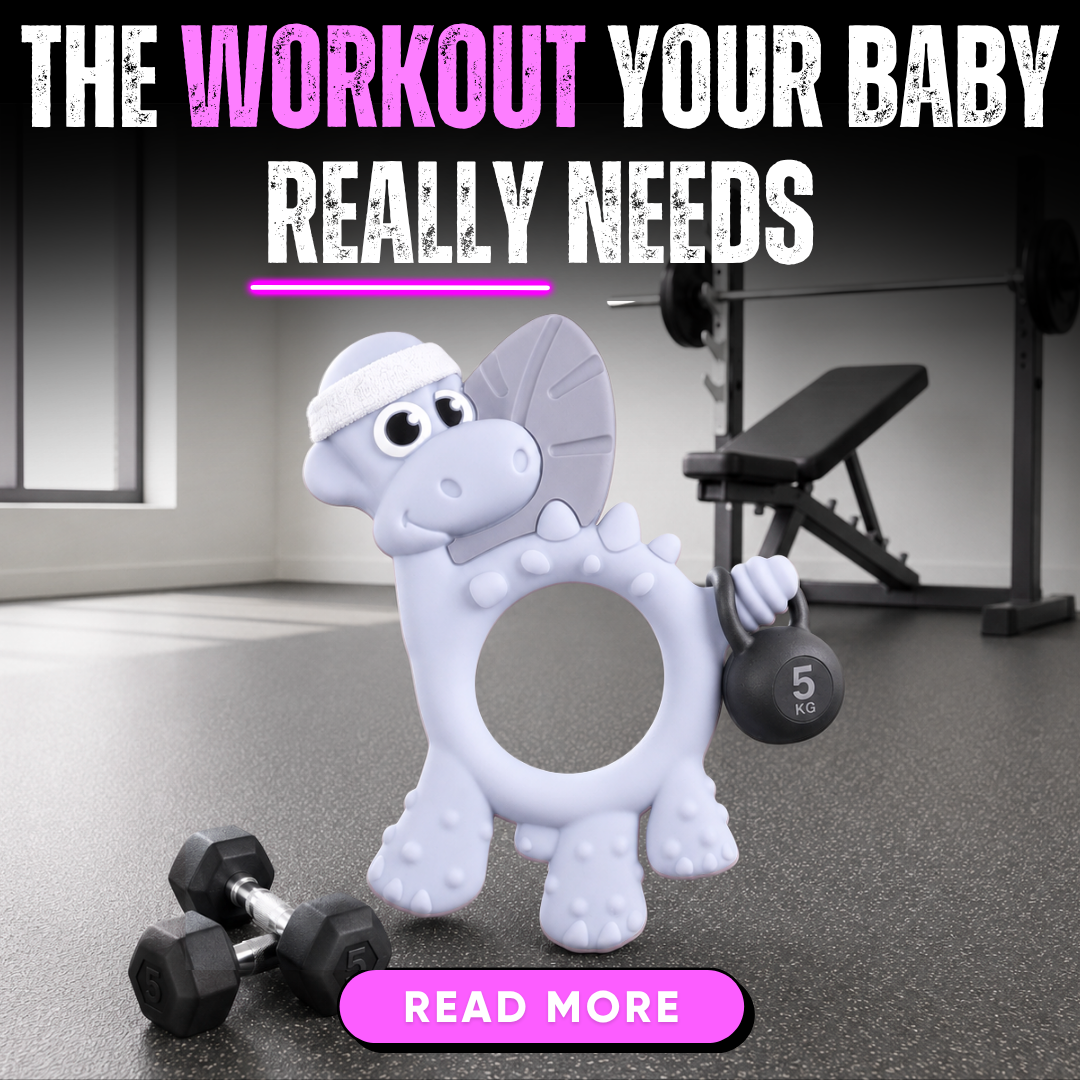
The Secret Workout Happening Inside Your Baby’s Mouth
Dotty is more than an ordinary teether. She is a multi-sensory mouth muscle gym, turning natural chewing and play into valuable practice for the exciting world of weaning.
Read more
The Weaning Parent’s Summer Survival Guide
How to handle heatwaves, holidays, disrupted routines and disappearing appetites — without losing your cool.
Read moreFollow us for more delicious, nutritious bite-size Bibado goodness
