Mealtime adventures are better with Bibado! Let our award-winning products make a difference to your weaning journey.
 Shop Now
CART
Your cart is empty
Mealtime adventures are better with Bibado! Let our award-winning products make a difference to your weaning journey.
Shop Now
Encouraging healthy mouth muscle development from early infancy lays the foundations for a child's future growth, but did you know the crucial role a simple, inexpensive teether could play in this process? Read on to find out why our Gold-Award-Winning Multi-Sensory Teether, Dotty The Dinosaur, was recently voted Mother & Baby’s top teething pick in the 2024 awards and why experts and dentists recommend her to parents.
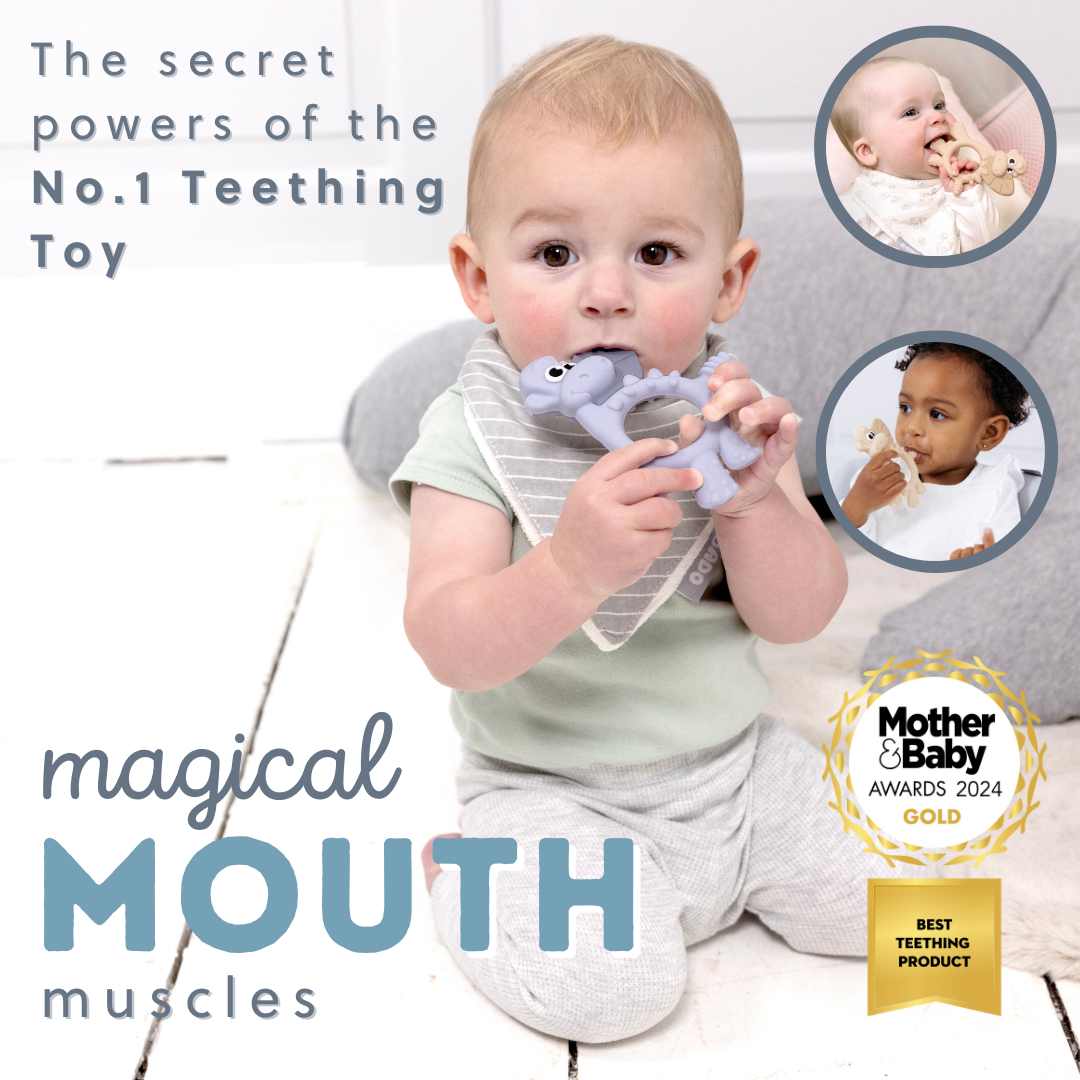
Encouraging healthy mouth muscle development from early infancy lays the foundations for a child's future growth, but did you know the crucial role a simple, inexpensive teether could play in this process? Read on to find out why our Gold-Award-Winning Multi-Sensory Teether, Dawn The Dinosaur, was recently voted Mother & Baby’s top teething pick in the 2024 awards and why experts and occupational therapists recommend her to parents.
It’s easy in the early days of parenthood to overlook the importance of lesser-known milestones, like the development of oral motor skills. After all, feeding, changing and adjusting to new sleep patterns are the tasks that dominate your every waking moment. However, an early understanding of the value of a full-mouth workout for your little one will pay huge dividends when it comes to weaning (which, let’s face it, will be upon you before you know it!)
Let’s start by looking at oral motor skills and why they are vital in weaning, speech, and early years development.
What are oral motor skills & why are they so vital?
The term ‘Oral Motor Skills’ generally refers to the use of the lips, tongue, cheeks, jaws, and hard and soft palates in vital functions like swallowing and speech. These oral motor skills develop in utero and continue for the first years of a child’s life. What you do in the early months of your little one’s mouth muscle development can make a positive and lasting difference. Here are just some of the areas oral motor skills impact:
Feeding and Nutrition: Proper development of mouth muscles is essential for breastfeeding, bottle-feeding, and transitioning to solid foods. Strong mouth muscles help babies effectively suck, swallow, and chew, ensuring they receive the necessary nutrition for healthy growth and development.
Speech and Language Development: Mouth muscles, including the tongue and lips, play a significant role in speech and language development. Babies start exploring and exercising these muscles from a very young age, which is crucial for later articulation and communication skills.
Facial Development: The development of mouth muscles is closely linked to facial development. Strong oral muscles help shape the face and contribute to the development of the palate and jaw, which can impact a child's facial features and dental health.
Mouth Movement: Oral motor skills encompass a range of movements and coordination within the mouth, such as sucking, blowing, and tongue movements. These skills are essential for various activities like drinking from a straw, blowing bubbles, and later, more complex tasks like articulating speech sounds.
Swallowing and Digestion: Well-developed mouth muscles ensure proper swallowing, preventing issues like choking or aspiration. Efficient swallowing also supports digestion and overall gastrointestinal health in babies.
Picky Eating and Food Acceptance: Babies with strong and coordinated mouth muscles are more likely to explore a variety of textures and flavours in their food, leading to a more adventurous palate. Underdeveloped mouth muscles may lead to feeding difficulties and picky eating habits. In fact, occupational therapists rank underdeveloped mouth muscles as the main cause of picky eating! (read our blog on this here)
Facial Expressions and Social Interaction: Mouth muscles are involved in forming facial expressions, which are crucial for non-verbal communication and social interaction. Smiling, frowning, and other facial expressions help babies engage with caregivers and express their needs and emotions.
Self-Comfort and Soothing: Babies often use their mouths to self-soothe by sucking on pacifiers or their thumbs. Developing oral motor skills is important for these soothing behaviours and can impact a baby's self-regulating ability.

So, how does a teether help?
Now we know why oral motor skills are so important, it’s time to make the link between them and the role of teethers. Most experts agree that you can and should be introducing oral toys as early as the first month of your baby’s life. Not only do they help them self-soothe, but they will also get them working on their jaw development right away. At around 4-5 months, it is completely normal to see babies putting anything and everything into their mouths. This should be safely encouraged and is a vital step in their development. If they’re already accustomed to a baby-safe silicone teether, they’ll be reaching for this in place of the remote control, your hair or other hazardous household items.

Alisha Grogan, Paediatric Occupational Therapist and friend of Bibado, advocates having teethers everywhere. She goes on to say, “Oral exploration is everything for babies. As soon as they start showing an interest in putting things in their mouths, you must arm them with a good teether with lots of surfaces to explore.” She suggests keeping one amongst their toys, in the changing bag, by the highchair - practically anywhere your curious baby will be. Read more here
What makes Dotty The Dinosaur different from other teethers?
Ok, so there are plenty of teethers out there, and some really well-known cute ones, too, so what makes Dotty so special? A note of caution. Where developmental teethers are concerned, function wins over style every time. Luckily, Dotty is adorable and loved by babies, too, but her features have been conceived with the help of experts and she's dentist-approved. Every single texture, bump and design element is intentional and intended to give little mouths a full muscle workout to help unlock the secrets to biting and chewing. Think of it like a gym circuit for the mouth without the hefty monthly subscription.

The diagram below shows the key features, but we’ll take you through a quick tour and explain what each area is designed to do.

Ring Design - first up, Dotty is based on a traditional ring design with a slight curve, which means it’s easier for little hands to pick up when she’s placed down. This helps nurture independence and important coordination and motor skills. She can be picked up easily with one hand or two, but the ring encourages a two-handed grip, a precursor to other developmental weaning tools in the range, like the Bibado Dippit spoon-and-dipper-in-one.
Bumpy feet - The raised texture on Dotty’s feet is ideal for sensory exploration and designed to build rotary chewing skills - that’s the circular motion of chewing rather than just up and down munching. This feature has been designed to reach the back of the mouth where your molars lead the way with rotary chewing and also supports oral mapping - the process by which you learn where objects are in your mouth - crucial for moving food around to chew and swallow effectively.
Dipper tail - Dotty’s tail shares the same ridged, honey-dipper design as our award-winning Dippit multi-stage weaning spoon. In Dotty, it’s intended to work on tongue lateralisation - to you and me, that’s the crucial side-to-side tongue movements that play a key role in helping to move food around the mouth. The dipper tail is also perfect for really getting to work on those back molars, and your little one will love biting down on it. The fact these two weaning tools share this key feature is very deliberate. Dotty is all about prepping little mouths for feeding success, whereas Dippit is the follow-on mealtime product designed to help transition those worked-out mouths to independent feeding and taste exploration.
Dotty’s domed head - a prominent domed nose and head helps to practice what is known as the oral seal, effectively kissing and pursing of the lips. This is the precursor to sucking with a straw and is vital for safe swallowing
Dotty’s Leaf - Perfectly formed for nibbling and biting, baby can explore the leaf’s indentations with their tongue and practice sealing their lips around the edges. Practising a lip seal is important for strengthening the mouth and instrumental in lip closure to keep food in the mouth.
All of Dotty’s features have been designed to allow babies to intuitively use them effectively. But don’t worry if your little one is nibbling the tail at the front of their mouth or exploring the bumpy feet with their tongue - any exploration is good exploration and a valuable learning and development experience!

So there you have it! A mouth muscle workout is the new tummy time and something here at Bibado, we’re keen to make sure all new parents know about. Being proactive in healthy mouth muscle development is one of the greatest gifts you can give to your growing child. It will contribute to their overall well-being, encompassing feeding and nutrition, as well as speech, facial development, social interaction, and various aspects of motor skills. It will also help to give you greater confidence in weaning because the earlier and more you help them strengthen their mouth muscles, the more effectively, and safer they’ll wean, making the process more magical and enjoyable for you both! Check out the award-winning Dotty The Dinosaur now - and don’t forget, at just £9.95, she’s the perfect newborn or baby shower gift, too.
Magical Mealtimes with the Coverall: Weaning’s Secret Weapon Uncovered!
Weaning is, without doubt, one of the most exciting stages of early childhood development, but the associated mess that comes with it can often lead parents to abject despair. It’s the main reason ...
Read more
A Royal Accolade For The Baby Bib Fit For A King
Bibado has been honoured with the first ever King’s Award for Enterprise in Innovation. The prestigious award recognises the Bibado Coverall Weaning Bib.
Read moreFollow us for more delicious, nutritious bite-size Bibado goodness
